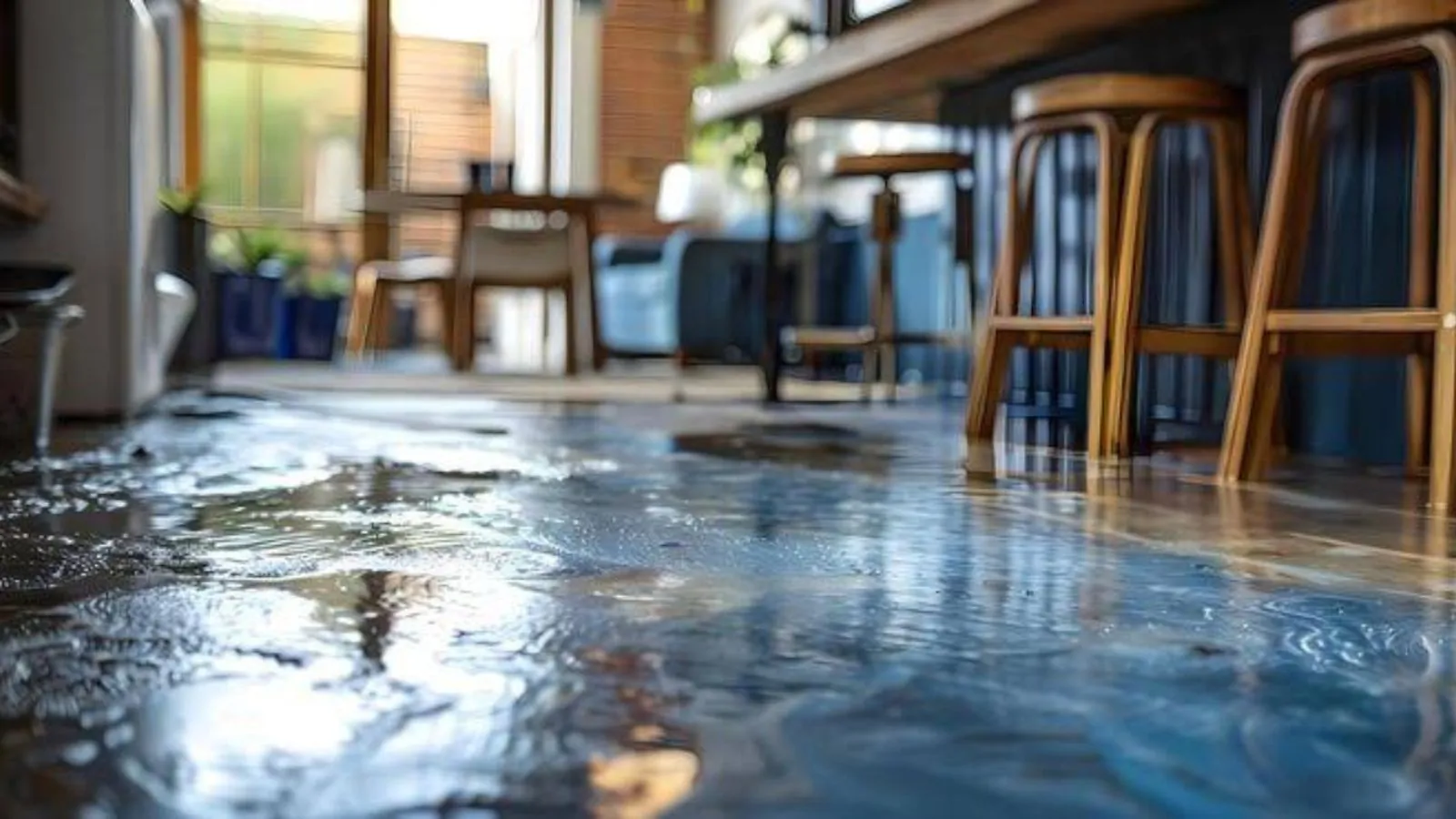
A water mitigation company limits the damage after water gets into a building. It stops further loss by removing water, drying wet materials and protecting what can still be saved. Mitigation is the emergency phase of a water loss. Rebuilding comes later and is usually done by a contractor. Knowing the difference helps you ask the right questions when you call.
The short version of the job
The mitigation crew arrives, finds where the water went and removes it. It then dries the structure until readings match a dry reference and records what it did. Along the way it decides which materials can stay and which have to be removed, because wet drywall, carpet pad and insulation often cannot be dried to a safe condition.
The work is mostly measurement. The crew uses moisture meters and thermal cameras to see where water traveled behind walls and under floors. Those tools turn a guess into a map.
Step by step
Assess and make safe
The crew checks for electrical and slip hazards, identifies the source and decides what category of water it is dealing with.
Stop the source
If water is still flowing, the main valve is closed. A plumber repairs the line. The crew handles the water.
Extract standing water
Pumps and extractors remove water from floors and carpet. See water extraction.
Remove what cannot be saved
Wet insulation, soft drywall and carpet pad that are beyond saving are removed and bagged.
Dry the structure
Air movers and dehumidifiers run until readings match a dry reference. See structural drying.
Document and report
Readings, photographs and a written scope are shared with you and your insurer.
Mitigation, repair and reconstruction
Mitigation is not the same as repair. Mitigation stops the damage and dries the structure. Repair replaces the materials that were removed, such as drywall, flooring and paint. Reconstruction is a larger rebuild after a major loss. Some companies do all three, others only the first. Ask what the quote covers.
The distinction matters for your insurance claim. Mitigation costs are often handled early because delay makes the loss bigger. Repair is scoped after the structure is dry and the full extent of removals is known.
Need the water stopped and removed?
Call the 24/7 line and describe where the water is.
The tools a crew brings
| Tool | What it does |
|---|---|
| Moisture meter | Reads moisture in wood, drywall and concrete. |
| Thermal camera | Shows temperature differences that suggest wet areas behind surfaces. |
| Extractor or pump | Removes standing water from floors and basements. |
| Air mover | Moves air across wet surfaces to speed evaporation. |
| Dehumidifier | Takes moisture out of the air so drying continues. |
| Hygrometer | Measures temperature and humidity in the room. |
Why speed matters
Water moves into porous materials quickly. Within a day, drywall can wick water upward and carpet pad can soak through. Within two days, mold can begin on wet organic surfaces. The EPA advises drying wet materials within 24 to 48 hours to prevent mold.
Speed also affects cost. A loss that is dried early usually involves fewer removals than one that sits. That is why a mitigation company advertises a 24/7 line. A burst pipe at midnight is a problem at midnight.
What the crew will ask you
- Where is the water coming from and has it been stopped?
- When did you first notice it?
- Which rooms and floors are wet?
- Is there standing water and how deep is it?
- Has the power been shut off in wet areas?
- Is it clean water, such as a supply line, or dirty water, such as sewage?
Answer as well as you can, and say so when you do not know. The crew would rather hear that you are unsure than guess. Photographs you send or show help them plan equipment before arrival.
What mitigation does not do
A mitigation crew does not fix plumbing, replace roofs or rebuild kitchens unless it is also licensed for that work. It does not decide your insurance coverage, and it cannot promise how long the drying will take before it sees the structure. Anyone who promises an exact timeline or result before inspecting the building is guessing.
It also does not remove every wet material. Its goal is the driest and safest structure it can reach with reasonable cost and effort. Where it recommends removal, it should be able to explain why.
How to compare companies
- Ask whether they use moisture meters and keep written readings.
- Ask what is included in the scope and what is not.
- Ask who handles the rebuild after drying.
- Ask whether they are licensed and insured.
- Ask how they document the work for an insurer.
- Be wary of anyone who asks for the full payment before work starts.
Mitigation for different kinds of water loss
A supply line break, a storm leak and a sewer backup all get mitigation, but each is handled differently. Clean water jobs focus on speed and drying. Storm jobs add the search for the entry point. Sewage jobs add containment and protective gear. See burst pipe water damage, storm water damage and sewage backup cleanup for each.
What to do while the crew works
Stay out of the way, keep pets and children clear and keep valuables out of wet rooms. Do not move equipment or turn it off, because crews set it up for airflow. Ask questions at each visit and note the readings. Keep the area closed so the drying equipment can work as planned.
Is water mitigation the same as water damage restoration?
They overlap. Mitigation is the emergency phase, and restoration often includes the repair that follows.
How long does drying take?
It depends on the materials and the amount of water. The crew can estimate after taking readings.
Will I need to leave the house?
Sometimes. It depends on the amount of water, the power situation and whether contaminated water is involved.
Do I need a plumber too?
If a pipe or fixture failed, yes. A plumber repairs it and the crew dries the damage.
If you are in Winthrop, call the 24/7 line. The crew also works in Boston and Nahant. For pipe emergencies see burst pipe water damage.
Sources and standards
The crew uses ANSI/IICRC S500 as its reference for water categories and drying methods. This page also draws on the public sources below.
- ANSI/IICRC S500, the standard and reference guide for professional water damage restoration (IICRC).
- U.S. EPA, A Brief Guide to Mold, Moisture and Your Home.