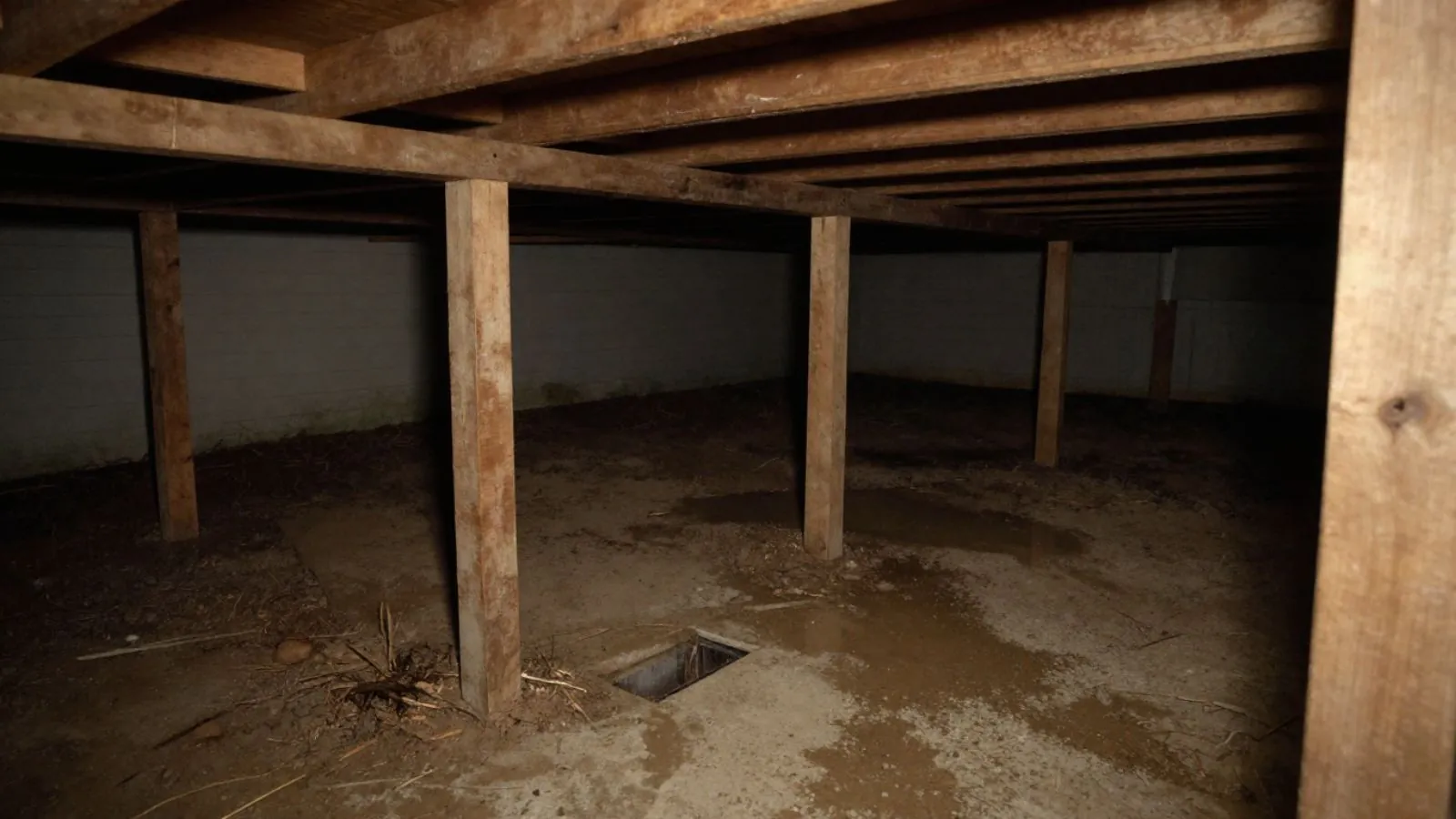
Crawl space water damage cleanup in Winthrop, MA deals with the part of the house nobody sees. Water can sit under the floor for weeks after a storm, a pipe leak or a drainage failure. Damp joists, wet insulation and a musty smell rising through the floor are the usual signs.
If you can see standing water and you can reach the opening safely, do not enter if there is electrical equipment in the water. Call the 24/7 line at (833) 521-1033 and describe the depth and the source.
Why crawl spaces take on water
Groundwater and rain
Saturated soil pushes water in through vents, foundation seams and low spots.
Plumbing leaks
Supply and drain lines that run under the house drip for long periods before anyone notices.
Storm intrusion
Wind-driven rain and surface water reach open vents. See storm water cleanup.
Condensation
Warm humid air meets cool surfaces and leaves moisture on joists and ducts.
Hidden water grows mold
Call and describe what you see in the crawl space.
How cleanup is done
The crew pumps standing water and checks joists and subfloor with a moisture meter. Wet fiberglass insulation sags and loses its value, so it is usually removed. Damaged vapor barrier is replaced. Air movers and dehumidifiers dry the framing, with readings checked until the wood is at the dry reference.
If mold is visible, state guidance for owners recommends a professional for larger areas. See mold remediation. Fixing the source is separate work. A plumber handles leaking lines and a drainage contractor handles groundwater.
What affects the scope and price
| Factor | Effect on the work |
|---|---|
| Access | Tight openings slow equipment and removal. |
| Water depth | Deeper water needs pumping first. |
| Insulation | Wet insulation is removed and replaced. |
| Duration | Long exposure raises the chance of mold on framing. |
| Rebuild scope | Insulation and vapor barrier replacement is quoted separately. |
Scope and price are explained before work starts. Insurers often distinguish sudden events from long-term seepage, and flood is usually a separate coverage. Check your policy and photograph what you can safely see.
Signs of a wet crawl space from inside the house
Most owners learn about a crawl space problem from the rooms above it. Floors that feel cold or soft, doors that stick in humid weather, a musty smell that rises when the heat comes on and cupped hardwood over a part of the house all point to moisture below. Pests that favor damp wood often show up first.
If you can look in with a flashlight from the access hatch, note what you see before you call. Standing water, dark staining on joists, sagging insulation and condensation on ducts each tell the crew something. Do not crawl in alone if there is water near wiring or if you cannot see where you are stepping.
What happens after the water is out
Pumping is the start, not the end. Wood framing takes days to dry, and drying has to be measured, not assumed. The crew records joist and subfloor readings and leaves equipment running until they reach the dry reference. A dehumidifier that sits in a crawl space with an open vent mostly pulls in outside air, so vents and openings are managed during drying.
Once the framing is dry, the open questions are what caused it and what protects it. A grading problem, a gutter that dumps at the foundation or a leaking line each needs its own fix. Insulation and vapor barrier are replaced last, so they are not soaked a second time.
Can you dry a crawl space without removing the floor?
Often yes, with equipment placed under the floor and readings tracked.
Is wet insulation salvageable?
Usually not. It holds water and does not recover.
Do you handle crawl space emergencies at night in Winthrop?
The 24/7 line is open at all hours. No arrival time is promised.
Does a dehumidifier fix it?
Only after the water source is fixed and standing water is removed.
Related pages are structural drying and basement water cleanup. Crews also serve Boston and Nahant.
Sources and standards
The crew uses ANSI/IICRC S500 as its reference for water categories and drying methods. This page also draws on the public sources below.
- ANSI/IICRC S500, the standard and reference guide for professional water damage restoration (IICRC).