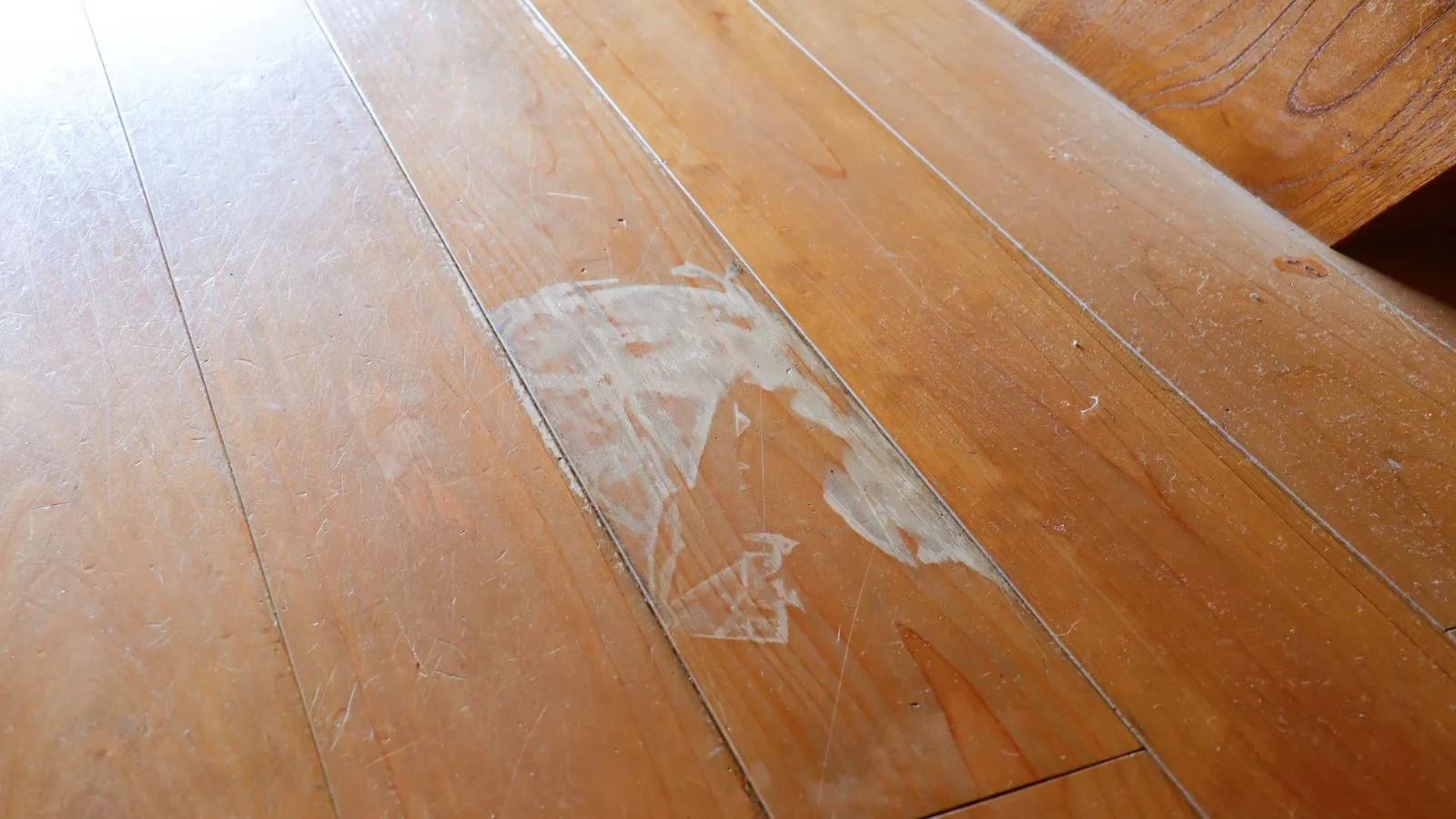
Hardwood floor water damage repair in Winthrop, MA depends on one thing: how wet the boards and the subfloor underneath them are. Wood is porous, so it takes in water and swells. Boards cup first, with raised edges and a dip in the middle. In worse cases they crown or buckle and lift from the subfloor.
If water is still on the floor, stop the source and call the 24/7 line at (833) 521-1033. If the floor is already cupping and the leak is gone, you are still in the window where drying can help. The longer a floor sits wet, the fewer boards can be kept.
What causes hardwood water damage
Appliance leaks
A washer supply valve or dishwasher hose can seep for days before anyone sees the boards cup. See appliance leak water damage.
HVAC condensate
A condensate line that backs up into a floor or closet leaks slowly into the subfloor.
Pipe failure
Burst supply lines flood floors quickly. See burst pipe water damage.
Humidity and sea air
Persistent damp air can move moisture into floors from below, especially over damp basements or crawl spaces.
Cupping, crowning and buckling
Cupping means the edges of each board sit higher than the center because the bottom of the board is wetter than the top. It usually happens when moisture comes from below. Crowning is the reverse and often follows a floor sanded while still damp. Buckling is the severe form, where boards push upward off the subfloor.
Cupping caught early can improve once the floor dries slowly, and a refinishing step afterward may level it. Buckling usually means boards have to be replaced. A flat reading at the surface does not tell you what the subfloor holds, so readings are taken from both.
Wood that has cupped is still drying out
Call and describe the floor and the water source. The earlier the readings, the better the options.
How the floor is dried
The crew extracts any surface water first, then measures the moisture content of the boards and the subfloor with a meter and compares it to a dry reading from the same wood in an unaffected room. Floor drying mats, air movers and dehumidifiers pull moisture out of the boards in a controlled way. Fast, hot drying can crack or split wood, so the process is monitored.
If water got between the boards and a finished floor on top of a slab, or under engineered or laminate flooring, those layers often have to come up for the subfloor to dry. Laminate and engineered planks with swollen edges are generally replaced instead of dried.
Repair choices: refinish, replace a section or replace the room
After drying, there are three outcomes. Boards that returned flat can be sanded and refinished. Damaged boards can be cut out and replaced in sections, though an exact match to older wood is not always possible. When damage is wide, replacing the whole floor is cleaner than a patchwork of repairs.
Finish and stain choices belong to the rebuild stage. Ask for the drying scope and the repair scope as two items so you can compare costs, and confirm the moisture readings are in range before any new finish goes on. A finish applied to a damp floor traps the problem.
What affects the scope and price
| Factor | Effect on the work |
|---|---|
| Species and thickness | Solid and engineered boards respond differently and have different repair limits. |
| Time wet | The longer the exposure, the more boards are likely lost. |
| Subfloor type | Plywood, plank and concrete subfloors dry at different rates. |
| Square footage | More floor means more mats, air movers and readings. |
| Finish and match | Matching an existing stain affects rebuild cost. |
Scope and price are explained before work starts. Coverage depends on the policy and on whether the water came suddenly or over time. Document the floor with photographs, including the first signs of cupping.
Safety steps while you wait
- Wipe standing water off the boards and move rugs and furniture off the floor.
- Do not use a heat gun, hair dryer or space heater to dry the floor fast.
- Keep foot traffic off swollen or lifting boards.
- Photograph the floor and any staining before cleanup.
- Call before you sand or refinish, because the wood must be dry first.
Will a cupped floor flatten on its own?
Sometimes, if the source is fixed and the floor dries slowly. Readings taken over several days show whether it is improving.
Can you sand a cupped floor right away?
No. Sanding before the wood is at its dry reading can lead to crowning and gaps later.
How long after a leak can I save the floor?
There is no hard cutoff, but boards wet for longer than a few days are far less likely to recover. Call as soon as you see the problem.
Does laminate flooring dry out?
Swollen laminate usually has to be replaced because the core material does not return to its shape.
Water that soaks a hardwood floor often reaches the carpet in the next room too, and drying is handled under structural drying. Crews also serve Boston and Nahant.
Sources and standards
The crew uses ANSI/IICRC S500 as its reference for water categories and drying methods. This page also draws on the public sources below.
- ANSI/IICRC S500, the standard and reference guide for professional water damage restoration (IICRC).