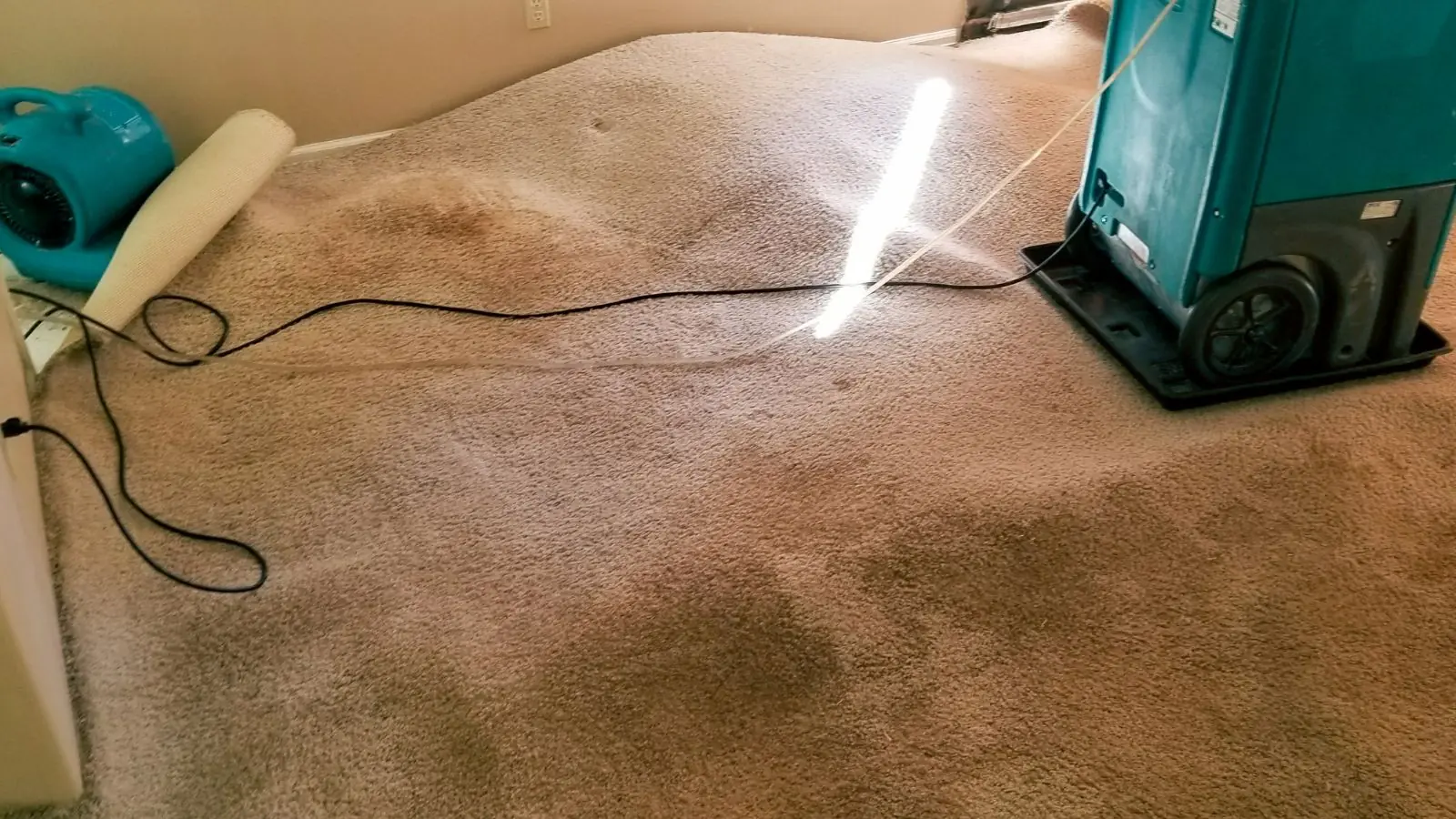
Structural drying and dehumidification in Winthrop, MA is the stage that follows extraction and decides whether a wet building recovers or grows mold. It uses moisture meters, thermal imaging, air movers and dehumidifiers to pull water out of framing, subfloors and wall cavities that cannot be seen or wrung out.
Drying is time-sensitive but rarely a midnight emergency once the water is out. If water is still present, call the 24/7 line at (833) 521-1033 first and read emergency water extraction. If the water is gone and the building still feels damp, this page is the right place.
Wet carpet, damp walls and a musty smell: the symptom version
Most people reach this page without knowing the trade term. They say the carpet is still damp after three days, a wall feels cool and soft, the room smells musty or the floor is cupping. All of these point to water that is still inside materials. Water mitigation is the term for stopping the damage by removing that water, and structural drying is the method.
What the equipment does
Moisture meters
Pin and pinless meters read how wet wood, drywall and concrete are, which turns a guess into a number.
Thermal imaging camera
Wet areas run cooler. The camera shows where water traveled, so the crew knows where to place the readings.
Air movers
High-velocity fans blow air across wet surfaces and push moisture into the room air.
LGR dehumidifiers
Low-grain refrigerant units pull that moisture out of the air so it does not settle back into materials.
Wet materials that stay wet cause bigger problems
Call and describe what is damp and how long it has been wet.
Moisture mapping and the dry standard
On the first visit the crew builds a moisture map. Readings are taken at set points on floors and walls, and a dry reference reading is taken from an unaffected part of the building. That reference becomes the drying goal for the same material.
Each day the crew returns, repeats the readings at the same points and adjusts equipment. Drying ends when the affected materials reach the reference level, not when the room feels dry. The record of readings is useful to your insurer and to anyone who rebuilds the space.
How long does drying take?
There is no fixed number of days. Many losses dry in a matter of days, but the answer depends on the materials, the volume of the space, the humidity in the house and how long the water sat. State guidance for owners stresses cleaning and drying wet areas inside 24 to 48 hours, which is why a call early is easier to dry than a call after a week.
Winthrop's humid coastal air and a small peninsula's worth of closed-up winter houses are a reason to plan on dehumidifiers rather than relying on open windows.
Water mitigation: what the term means
Water mitigation means the emergency steps that stop a loss from growing: stopping the source, extracting water, removing materials that cannot be dried and starting controlled drying. It is different from repair, which rebuilds finishes afterward. Structural drying is the bulk of the mitigation work.
Equipment is used on the job, not rented out
Callers sometimes ask to rent air movers or dehumidifiers and dry the place themselves. This service does not rent equipment. The reason is practical: equipment placement, readings and the stop point are the part that takes skill. Rented fans alone often leave framing wet.
For a surface-only spill on a sealed floor, the right answer may be a household fan and a dehumidifier. If water got into cavities, subfloors or insulation, call for a moisture map.
What affects the scope and price
| Factor | Effect on the work |
|---|---|
| Volume of the space | More cubic feet needs more air movement and dehumidification. |
| Materials | Concrete, wood and drywall each hold and release water at different rates. |
| Days of drying | Equipment time and monitoring visits increase the cost. |
| Water category | Contaminated water changes what can stay in place to dry. |
| Hidden moisture | Water in cavities may call for small openings so air can reach it. |
Scope and price are explained before work starts. Drying records can support a claim, and coverage depends on the policy and the cause. Ask your insurer which documents they want.
Safety steps while you wait
- Keep drying equipment plugged in and running. Do not move or switch it off.
- Keep children and pets away from cords and moving air movers.
- Keep doors and windows closed in the drying area unless the crew says otherwise.
- Do not turn up the heat to dry the room faster without asking the crew.
- Note any new stains or smells and tell the crew at the next visit.
How do I know the building is actually dry?
Moisture readings compared against a dry reference reading. The crew logs them daily. A room can feel dry well before the framing is.
Can I dry a flood myself with fans?
For a small spill on a sealed surface, perhaps. For water in cavities, subfloors or porous materials, a moisture map and proper equipment are needed.
Do you rent air movers or dehumidifiers?
No. Equipment is used on jobs the crew manages.
Will drying stop mold?
Fast, thorough drying removes the moisture that mold needs, but no one can promise mold will not appear. See mold remediation if you find growth.
Drying follows removal of ruined materials such as carpet and pad or wet drywall. Crews also serve Boston and Nahant.
Sources and standards
The crew uses ANSI/IICRC S500 as its reference for water categories and drying methods. This page also draws on the public sources below.
- ANSI/IICRC S500, the standard and reference guide for professional water damage restoration (IICRC).